
How to Find Recently Released Prince William County Inmates
Finding a recently released Prince William County inmate takes a bit of legwork. The county jail, the Prince William-Manassas Regional Adult Detention Center, does not post a public online roster or a "released within X days" list. That means there is no web page where you can just type a name and see a release date. The jail serves Prince William County, the towns of Occoquan, Quantico, Triangle, Dumfries, and Haymarket, and the Cities of Manassas and Manassas Park. So a wide area routes through one facility.
Start with the source closest to the person. If they were held locally and may still be in or just out, call the jail. If they were sentenced and moved to a state prison, the Virginia Department of Corrections locator is the place to look. Federal cases run through the Bureau of Prisons. Court records can show bond and hearing outcomes, but a docket is not a custody roster.
Here are the main ways to confirm a Prince William County release:
- Call the Prince William-Manassas ADC at (703) 792-6420 to ask about local custody status.
- Register on VINELink for custody and release alerts where the person and facility are covered.
- Search the VADOC locator if the person was moved to state custody.
- Search the BOP locator if the case was federal.
- Check court systems for bond and hearing data tied to a release decision.
Have a full legal name ready before you start. A date of birth helps a lot when two people share a name. A booking or jail number is useful for funds and mail, though you will not always have one. The local Prince William County inmate records page covers how the jail handles name and booking lookups by phone.
Note: The jail treats inmate account details as confidential, so staff will not share account or funds information with family or the public.
Setting Up Prince William County Release Notifications
VINELink is the free service many people use to track custody changes. It can send a release alert by phone, text, or email when a covered person leaves a covered facility. You pick a state, search for the person, and then register for alerts. The exact labels can shift, since the tool runs a dynamic interface that varies by state module. Virginia is one of the states it covers.
You can sign up for VINELink before a release happens. That way the alert reaches you the moment the system updates. Many victims use it for safety planning, and families use it to know when to expect a relative home.
The VINELink registration tool lets you set custody notifications for a covered person. You can register for release alerts on VINELink and walk through the steps below.
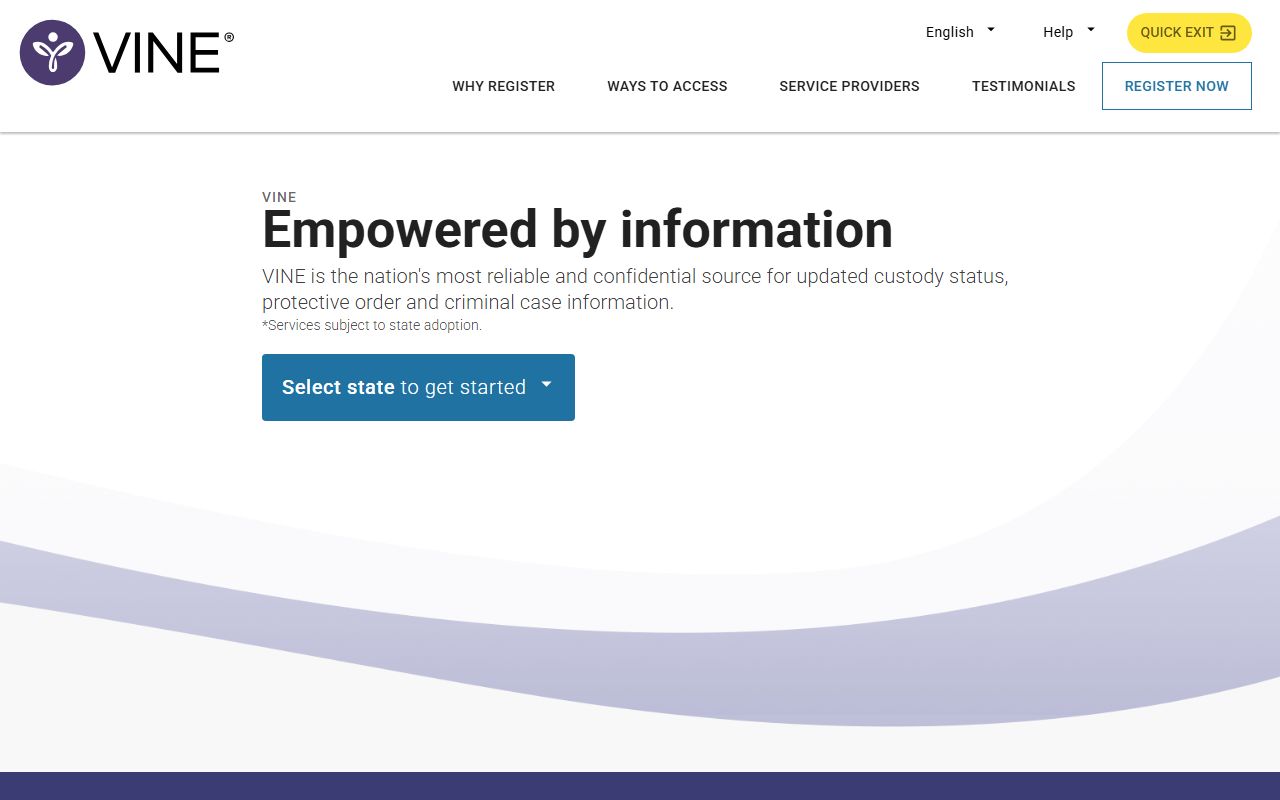
The page guides you to choose Virginia, search by name or ID, and add a phone, text, or email contact for alerts. The table lists the main VINELink fields and how each one works.
| Field Label | Type | Required | Notes / Format |
|---|---|---|---|
| State | Selector | Yes | Choose Virginia. |
| Name / ID | Text | Conditional | Search offender or case; depends on the state module. |
| Registration / contact | Form | Optional for alerts | Set up phone, email, or text notification. |
| Search | Button | Yes | Dynamic interface; exact labels may vary. |
Searching State and Federal Released Prince William County Inmates
When a Prince William County inmate is sentenced to a term in state prison, custody moves from the local jail to the Virginia Department of Corrections. The VADOC locator is the public tool for that. It includes people in VADOC institutions, probationers and parolees under district office supervision, institutional hospitals, local and regional jails under VADOC authority, and CCAP participants. The data updates daily but is not guaranteed, and it may be outdated or wrong.
You can search the VADOC locator by name or by DOC ID number. A few optional filters help narrow the list. You must agree to the disclaimer before the search will run.
The Virginia Department of Corrections runs the state custody and supervision search. Open the VADOC inmate and supervisee locator to look up state custody. The table below lists its search fields.
| Field Label | Type | Required | Notes / Format |
|---|---|---|---|
| First Name | Text | Required for name search | Search by first and last name together. |
| Last Name | Text | Required for name search | Search by first and last name together. |
| DOC ID# | Text | Alternative required | Search by ID instead of name. |
| Location | Dropdown | Optional | Additional search option. |
| Race | Radio / dropdown | Optional | American Indian or Alaskan Native; Asian or Pacific Islander; Black; White. |
| Gender | Radio / dropdown | Optional | Male; Female. |
| Age Range | Radio / dropdown | Optional | 18-24; 25-35; 36-45; 46-55; 56-64; 65-74; 75+. |
| Disclaimer agreement | Checkbox | Required | "I have read and agree to the disclaimer." |
| Locate | Button | Yes | Runs the search. |
Federal cases are different. If someone faced a federal charge, the Bureau of Prisons holds them, not the state. The BOP locator covers federal custody and release. You can search by a number or by name with a few extra details.
The Bureau of Prisons keeps the federal inmate database. Use the BOP inmate locator for federal custody and release data. Its fields are shown in the next table.
| Field Label | Type | Required | Notes / Format |
|---|---|---|---|
| Search by number | Tab / radio | Conditional | BOP Register Number, DCDC Number, FBI Number, or INS Number. |
| Search by name | Tab / radio | Conditional | First, middle, last; race; age; sex. |
| Find | Button | Yes | Searches the federal custody and release database. |
Court files round out the picture. A case docket can show a bond ruling or a hearing that led to release, but it will not list a current custody status. For research on case history, CourtListener public legal search can help. The tool is shown below.
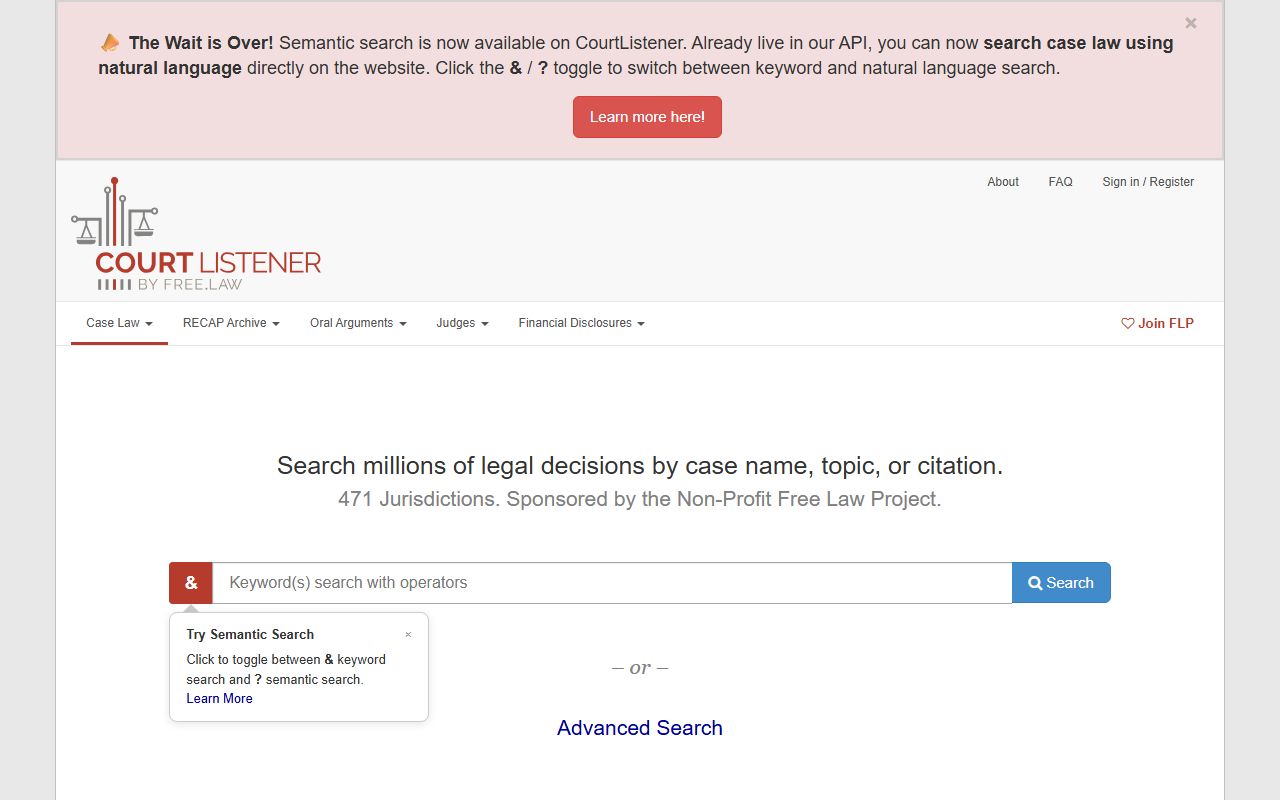
It indexes court opinions and dockets, which can fill in the legal backstory behind a release even though it is not a jail roster.
Verifying a Prince William County Release in Person or by Phone
The fastest way to confirm a local release is a phone call. The Prince William-Manassas ADC answers custody questions at (703) 792-6420. Give the full legal name. A date of birth helps staff tell apart people with the same name. A booking or jail number is handy if you have it. Staff can confirm limited release information, and VINELink can confirm it too if you registered for that person.
Remember what the jail will and will not share. Custody status may be confirmed, but the inmate account and funds details stay private. There is no walk-up kiosk that prints a release record for the public.
One release step trips up many families. When someone leaves the jail, the ADC reviews their inmate account and issues the remaining balance as a check. If that check is not claimed, the jail holds the funds for 16 to 28 months. After that window, the unclaimed money is turned over to the Virginia State Treasury. So a former inmate or their family should follow up on any account balance soon after release.
Prince William-Manassas Regional ADC
9320 Lee Avenue
Manassas, VA 20110
(703) 792-6420 (TTY: 711)
Funds office: Mon-Fri 8:00 a.m. to 4:00 p.m.
adc@pwcgov.org
Note: The ADC does not release inmate account information to family or the public, so a former inmate may need to claim a balance check in person.
The Sex Offender Registry After Release
Some people who leave custody must register as sex offenders. Virginia runs a public registry through the Virginia State Police. The registry is open to the public and lets you search for registered offenders by name and area. It is a separate system from any jail or prison locator. A release from custody does not remove a person from the registry.
You can search the Virginia State Police Sex Offender Registry for registered offenders in and around the county. The registry helps the public stay aware of who lives nearby after release.
What the registry covers, in plain terms:
- It is maintained by the Virginia State Police as a public safety tool.
- It lists people required to register under Virginia law after certain offenses.
- It is open to the public and searchable online.
- A custody release does not end a registration duty.
The detailed search fields for the registry page are not documented here. For exact search options and what each result shows, use the official Virginia State Police registry site directly.
Parole and Probation Information
Many people leave prison under supervision rather than a clean release. Parole and probation are both forms of supervised release in the community. The Virginia Department of Corrections runs supervision through its district probation and parole offices. The VADOC locator reflects this, since it lists probationers and parolees supervised by district offices, not just people behind bars.
That is why a search may show someone as supervised rather than confined. If the locator lists a district office instead of a prison, the person is likely out and under supervision. Supervision terms set rules the person must follow, and a violation can send them back to custody.
To check supervision status tied to Prince William County, the same VADOC locator is the right tool. For the criminal case that led to the sentence, look at Prince William County arrest records or the full case file through Prince William County court records. A bond or release decision often appears on the docket. Warrant activity, including any violation warrant, shows up through Prince William County warrant records.
Reentry Resources for Released Prince William County Inmates
Coming home from jail or prison is hard, and the county jail's stated mission includes rehabilitative programs meant to cut repeat offenses after release. Beyond the jail, the Virginia Department of Corrections gathers help for people reentering society. These resources cover housing, jobs, identification, benefits, and more. They serve former inmates returning to Prince William County and the rest of the state.
The state's reentry hub is a strong starting point. You can browse VADOC reentry resources for programs that support people after release. The page is shown below.
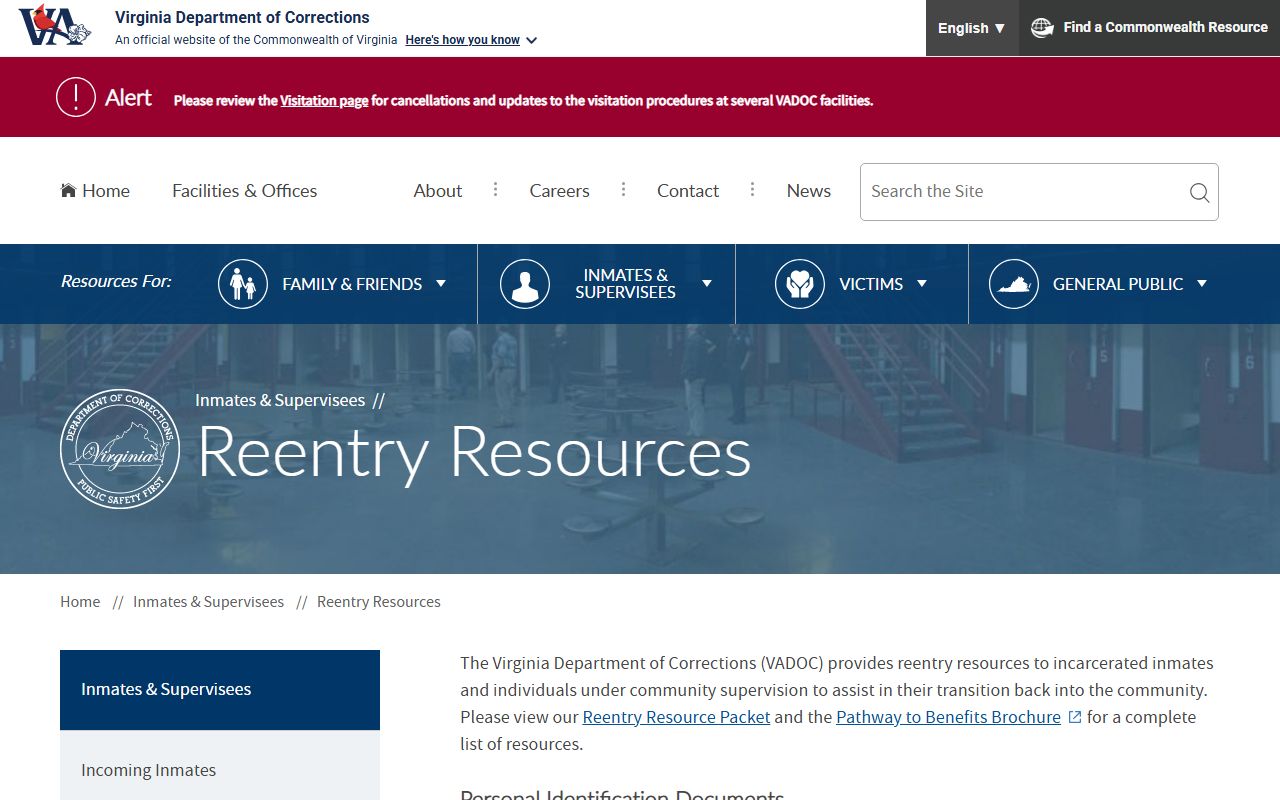
It links to veterans resources, the state bonding program for hiring, and other tools that help a former inmate get back on their feet.
Legal help matters during reentry too. Several official services support people who need it:
- The Virginia Judiciary Self-Help site explains civil, family, and protective order steps.
- The Virginia Judiciary's court forms library holds the documents used in circuit, district, and JDR cases.
- Legal Services of Northern Virginia likely serves the Prince William area for free civil legal aid.
- The Virginia Indigent Defense Commission supports court-appointed counsel for criminal defendants.
Note: Clerk and court staff can give procedural information and records, but they cannot give legal advice or tell you how to win a case.
Civil Rights Restoration After Release
A felony conviction in Virginia strips certain civil rights. These can include the right to vote, to serve on a jury, to hold public office, and to be a notary. After release, some of these rights may be restored. Virginia handles the restoration of voting rights through the executive process, which means the Governor's office plays a central role. The exact policy has changed across administrations.
Because the rules shift, do not assume a fixed standard. Check the current executive restoration policy before you act on any assumption. The Virginia Department of Elections is the place to verify how voting-rights restoration works at the time you apply, and it can point you to the right office.
Restoring the right to own a firearm is a separate court process from voting rights. It is not automatic. A person seeking that relief usually petitions the Circuit Court, so the Prince William County court records system and the Clerk of Circuit Court come into play. Always confirm the current steps before filing, since both court rules and executive policy can change over time.