
How to Search Prince William County Traffic Court Records
Most traffic cases are searched through the General District Court Case Information system. This tool gives online access by locality to civil, criminal, and traffic cases in Virginia's general district courts. You pick the court first, then search. The system runs in real time, so a recent ticket may take a few days to appear.
Pick Prince William General District Court from the locality list. After that you can search by name, by case number, or by hearing date. A name search is the easy path when you do not have the ticket in hand. A case number search is faster when you do.
The official entry point sits on the Virginia courts site.
Open the General District Court Case Information system to begin a Prince William County traffic court records search.
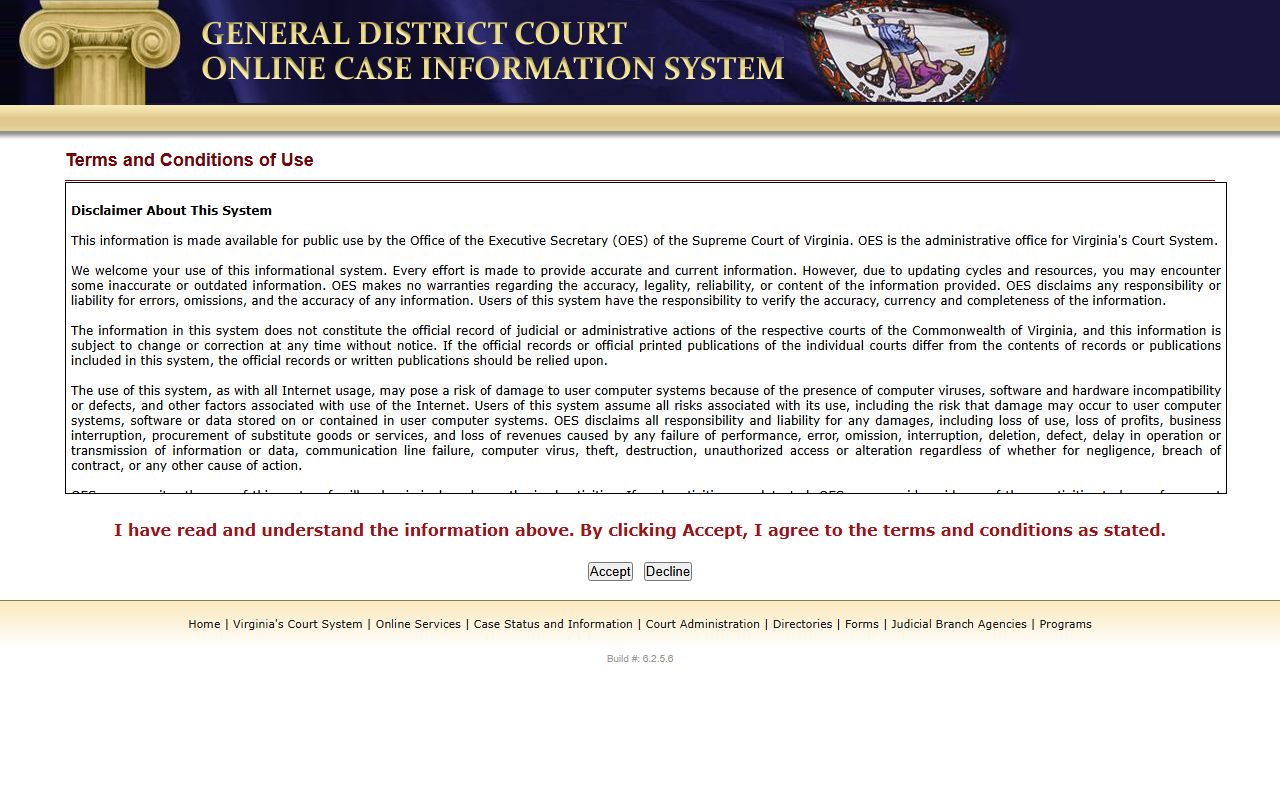
The locality menu lists every general district court, and you choose Prince William before any search fields show.
A statewide tool also reaches traffic cases. The Online Case Information System searches criminal and traffic case data in general district courts, adult criminal cases in JDR courts, and select circuit courts. It is good for a quick find across many courts. It cannot take payments, though, so it works best as a lookup step before you switch to the General District system to pay.
- Open the General District Court Case Information system and accept the terms.
- Select Prince William General District Court from the locality list.
- Choose the traffic or criminal division.
- Search by Name, Case Number, or Hearing Date.
- Click a case to open the details, then use the Pay option if a balance is due.
Which Courts Handle Traffic Cases in Prince William County
The General District Court is the main court for traffic in Prince William County. It handles traffic infractions and most misdemeanor traffic charges under state law and local rules. It also holds preliminary hearings in some serious cases. There are no jury trials in this court. A judge hears the case and rules.
The traffic and criminal division sits in Suite 230 at the Judicial Center. The court address is 9311 Lee Avenue, Manassas, VA 20110-5586. The traffic and criminal phone line is (703) 792-6141. The civil and small claims division uses a separate suite and a separate number, so call the traffic line for ticket questions.
General District Court, Traffic and Criminal
Judicial Center, Suite 230
9311 Lee Avenue
Manassas, VA 20110-5586
(703) 792-6141
Some cases move up or sideways. A driver who loses a case in the General District Court can appeal to the Circuit Court, where the case is heard fresh. Serious traffic crimes, like felony charges tied to driving, can land in Circuit Court from the start. The Prince William County court records page covers the Circuit system in full.
Federal tickets are different. A citation written on federal land or a federal parkway is not a state case. Those go to a federal court, not the General District Court.
Federal traffic citations route to one federal court for this region.
The U.S. District Court for the Eastern District of Virginia handles traffic citations issued on federal property and federal parkways.
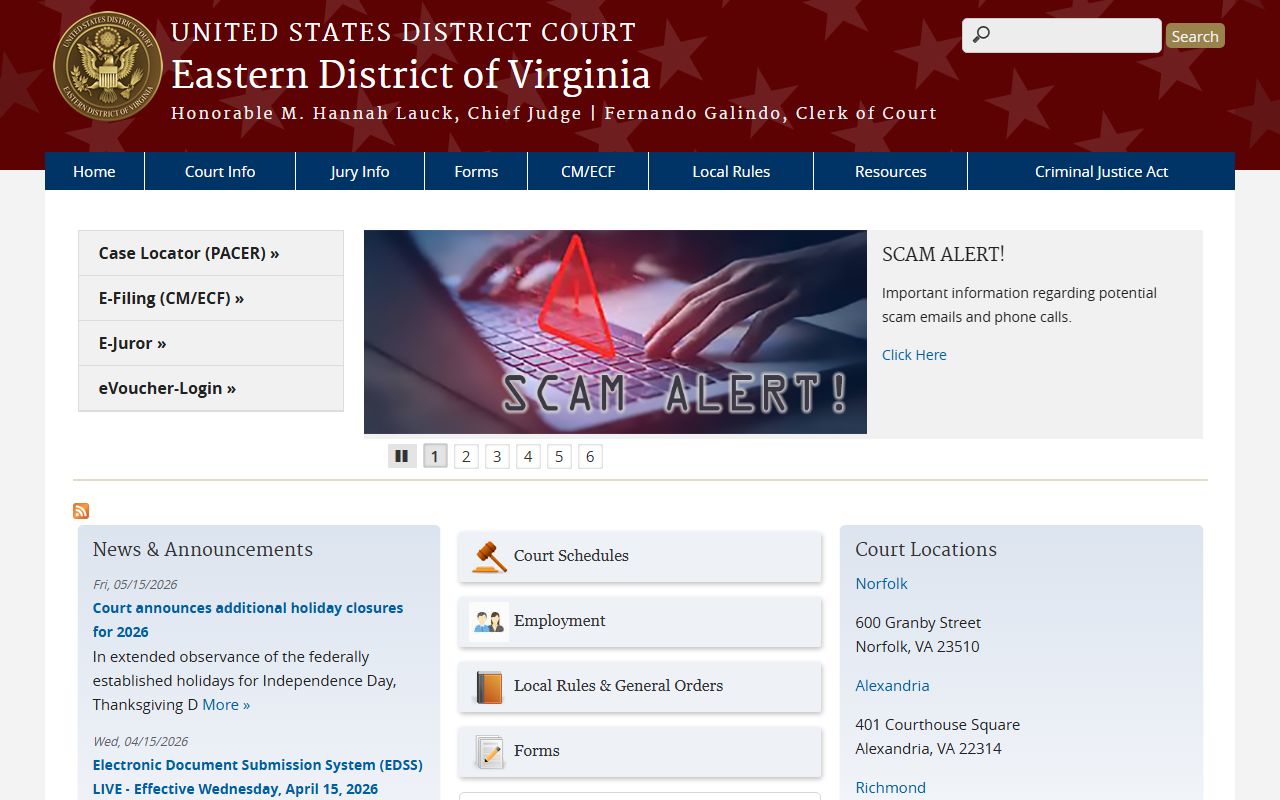
If your ticket lists a federal court or a parkway, start with that court rather than the county system.
Types of Traffic Cases on Record
Traffic cases split into two broad groups. Infractions are the lowest level. They are not crimes, but they still create a court record and a fine. Misdemeanor traffic charges are crimes, and they can carry jail time. The General District Court hears both.
Common cases on file in Prince William County traffic court records include the kinds of charges most drivers know. Reckless driving is the one many people are surprised to see, since it is a misdemeanor, not a simple ticket.
- Speeding and other moving infractions.
- Reckless driving and aggressive driving.
- Driving on a suspended or revoked license.
- No insurance, expired registration, and equipment violations.
- Failure to obey signs, signals, or right-of-way rules.
DUI and DWI charges are a class of their own. They are criminal matters and may route to criminal court. Those cases get their own short section below, with a link to fuller coverage. Juvenile traffic cases follow a different track too, since they go to the Juvenile and Domestic Relations District Court and are often not open to the public.
Note: A charge that starts as a simple ticket can be amended up or down in court, so the final record may not match the original citation.
What Prince William County Traffic Court Records Show
A traffic case file holds the same kind of data as other court records. It names the court and the division. It lists the case number, the charge, the filing or offense date, and the court date. It shows the disposition, which is the result of the case. If a fine or cost is owed, the file shows the balance.
The table below lists the main fields you see when you open a traffic case and what each one tells you.
| Field | What It Shows |
|---|---|
| Case Number | The court and case ID; General District numbers begin with G. |
| Charge | The traffic offense, with the code section if listed. |
| Offense / Filing Date | When the citation was written or the case opened. |
| Hearing Date | The court date and courtroom, if set. |
| Disposition | The result, such as guilty, dismissed, or amended. |
| Fines and Costs | The amount due and any balance left to pay. |
The disposition is the field most people care about. A guilty finding can lead to points and a fine. A dismissal means the charge ended without a conviction. An amended charge means the court changed it to a lesser offense. Each of these reads differently on the file, so check the disposition line with care.
Searching by Citation Number vs by Name
The General District system lets you search a few ways. The two most common are by case number and by name. Each has its place. A case number search is exact and pulls one file. A name search casts a wider net and can return many cases for one person.
The fields below show how the citation lookup works on the General District Court Case Information system.
| Field | Type | Required | Notes / Format |
|---|---|---|---|
| Court / locality | Dropdown | Yes | Choose Prince William General District Court. |
| Name | Text | Conditional | Search by party or defendant name. |
| Case Number | Text | Conditional | General District numbers begin with G. |
| Hearing Date | Date | Conditional | Used to find a docket or court date. |
| Search / Submit | Button | Yes | Runs the search; label varies by screen. |
| Pay | Button / link | Conditional | Pays a balance through the GDC system. |
Use the case number when you have the ticket. The G prefix tells you the case lives in the General District Court. If you only know the name, search that way, then match the charge and court date to pick the right case. A name search can show old cases too, so read the dates with care.
Paying or Contesting a Prince William County Traffic Ticket
You usually have two choices on a ticket. You can pay it, which often means you admit the charge. Or you can contest it and go to court. The path you pick changes what shows up in your Prince William County traffic court records. A paid ticket and a contested one read differently on the file.
Payments for General District cases run through the GDC system. The Online Case Information System cannot take payments, so use the General District tool when money is due. Some charges, like reckless driving, must be heard in court and cannot be prepaid. Check the ticket and the case file before you assume you can just pay.
- Open the General District Court Case Information system and find your case.
- Read the charge to see if it can be prepaid or must be heard.
- To pay, use the Pay option and settle the fine and costs through the GDC system.
- To contest, keep the court date and appear, or hire a lawyer to appear for you.
- After the hearing, check the disposition on the case to confirm the result.
If you miss a court date, the court can enter a finding without you and add costs. A suspended license can follow unpaid fines. Call the traffic division at (703) 792-6141 if you are unsure about a date or a balance.
Public Access Laws for Traffic Court Records
Most traffic court records are open. Anyone may search them through the General District system or view a file at the courthouse. Virginia keeps two access tracks. The Virginia Freedom of Information Act covers records held by public bodies. Court case files follow court rules and the clerk statutes instead.
Court and clerk records are open to inspection under Virginia Code § 17.1-208 unless a statute, rule, or order limits them. Requests for non-case agency records use Virginia Code § 2.2-3704, which sets the steps and the response time. The Prince William County public records page covers that track in detail.
Juvenile traffic cases are the main exception. They go to the JDR court and are limited under Virginia Code § 16.1-305. Sealed and expunged cases are also closed to the public. For most adult tickets, though, the file stays open.
Note: The county disclaimer says staff try to keep case data current, but each user must verify accuracy and completeness before relying on it.
Court Traffic Records vs State Driver Records
This is the point that trips up most people. The court traffic record and the state driver record are two separate files. The court file is the case in the General District Court. The driver record is kept by the Virginia DMV. They are linked, but they are not the same paper, and you fix errors in each in a different place.
The court record shows the case: the charge, the court date, and the result. The driver record shows the effect on your license: the conviction, the points, and the license status. A traffic conviction in court can flow to your DMV record. But the two are managed by different offices.
| Court Traffic Record | State Driver Record |
|---|---|
| Record source: the General District Court case file. | Record source: the Virginia DMV driver file. |
| What it contains: charge, court date, disposition, fines. | What it contains: convictions, points, license status. |
| Where to access: the General District Court Case Information system. | Where to access: the Virginia DMV. |
| How to fix errors: petition or motion through the court. | How to fix errors: contest the entry with the DMV. |
Why does this matter? If you want to know what happened in court, pull the court file. If you want to know how a ticket hit your license, pull the DMV record. Clearing a court case does not always clear the DMV entry on its own, so check both when a conviction is at stake.
CDL and Commercial Driver Records
Commercial drivers face stricter rules. A CDL holder is held to a higher standard for traffic charges, even in a personal car. A conviction that a regular driver might shrug off can put a commercial license at risk. The court file looks the same, but the impact on the driver record is larger.
State and federal rules bar a CDL holder from masking a conviction. That means a commercial driver cannot take certain options that hide a ticket from the record. So the court traffic record and the driver record line up more tightly for CDL holders than for others.
If you hold a CDL and get a ticket, treat it with care. Read the charge in the General District file, and check how the conviction will read on your driver record. A lawyer who knows commercial cases can help weigh whether to contest.
DUI / DWI Cases
DUI and DWI are not simple traffic tickets. They are criminal charges. A first offense is a misdemeanor heard in the General District Court, but the case can route to criminal court, and a felony charge starts in Circuit Court. The Commonwealth's Attorney prosecutes the serious ones.
The office that handles serious traffic crimes has its own page.
The Prince William County Commonwealth's Attorney prosecutes DUI, DWI, and other serious traffic crimes.
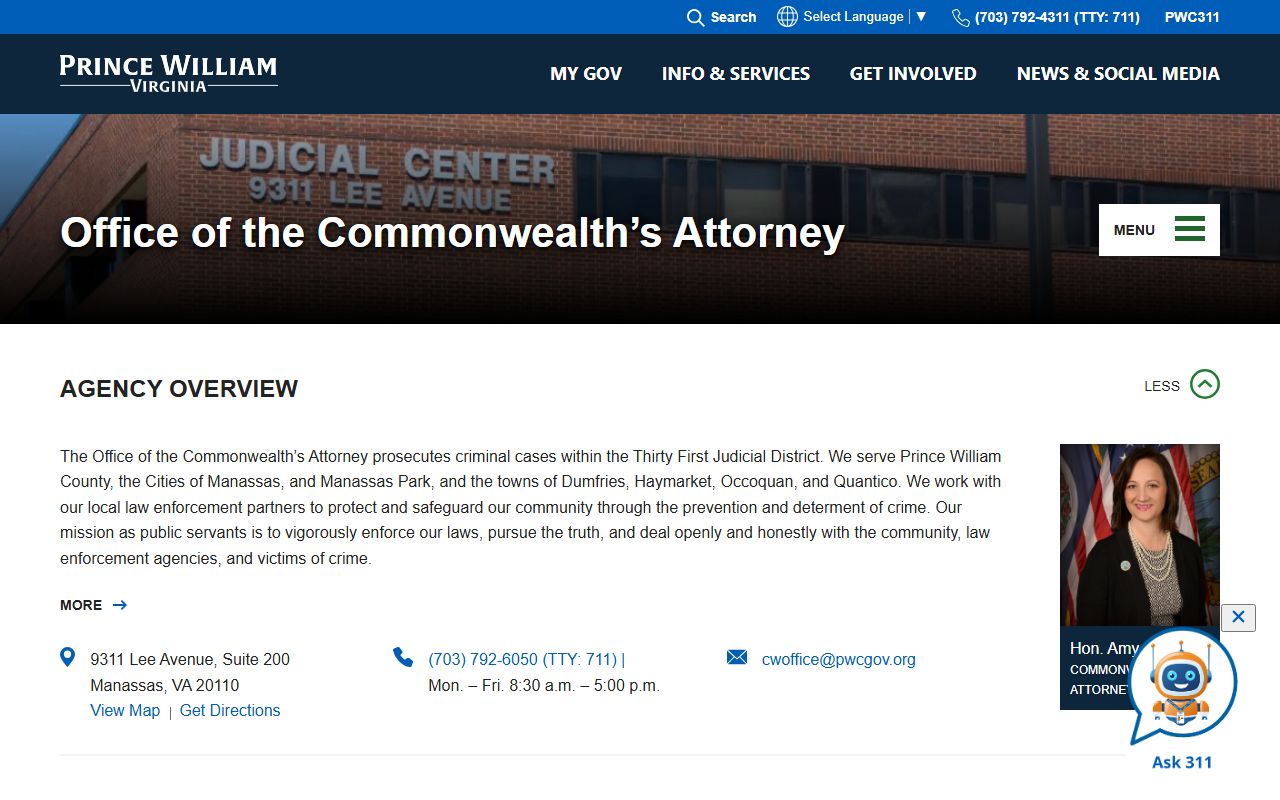
Because these cases are criminal, they show up with arrest and booking data. The Prince William County arrest records page covers DUI and DWI handling, booking, and the charge-versus-conviction split in full.
Deferred Adjudication and Defensive Driving Course
Some drivers can avoid a conviction on the record. A court may defer a finding and give the driver a chance to meet conditions. One common condition is a driver improvement course, often called defensive driving. Finish the course, meet the terms, and the charge may be dropped or reduced.
This path is not open to every charge or every driver. A judge decides. Reckless driving and DUI rarely qualify for a simple course outcome. A clean record helps your odds. So does a lawyer who can ask the court for the option.
If the court defers your case, the file will note the conditions and the date by which you must finish. Keep proof of the course. Bring it back to the court, then check the disposition to confirm the case closed the way you expected.
Sealing or Expunging Traffic Records
Not every case can be cleared, but some can. If a traffic charge ended in your favor, you may be able to remove it from public view. That clearing is called expungement. It applies to a charge that was dismissed, taken under nolle prosequi, or ended in an acquittal.
You file an expungement petition with the Circuit Court. Virginia's main expungement statute sets who qualifies and how the process runs.
The right to petition is set by Virginia Code § 19.2-392.2, which covers dismissed, nolle prosequi, acquittal, and certain other eligible cases.
A conviction is harder to clear. Many traffic convictions cannot be expunged at all. The rules around sealing have changed in recent years, so check the current law or ask a lawyer before you file. The Clerk of Circuit Court page explains the petition steps and the copy fees tied to a request.
Fees for Traffic Record Copies
Searching online is free. You only pay when you want a copy or a certified document. The Clerk sets the copy fees, and they follow a simple schedule. A plain copy runs by the page. A certified copy carries a flat fee per document.
The table lists the common copy fees you may face when you request a traffic record.
| Item | Fee |
|---|---|
| Plain copy | $0.50 per page, not to exceed $10. |
| Certified copy | $2 per document. |
| Case of 100 pages or less | $10. |
| Case over 100 pages | $25. |
Fines and court costs are not the same as copy fees. Those are set by the charge and the court, and you pay them through the GDC system. For copy questions, the Clerk's Office can confirm the cost before you make a request. You may also need Prince William County court dockets for upcoming court dates tied to a ticket.